Body Talk With Chidinma
No. 1 Women's Health Blog in Africa — Real Talk. Real Relief. Real Women.
Women's Reproductive Health · May 2026
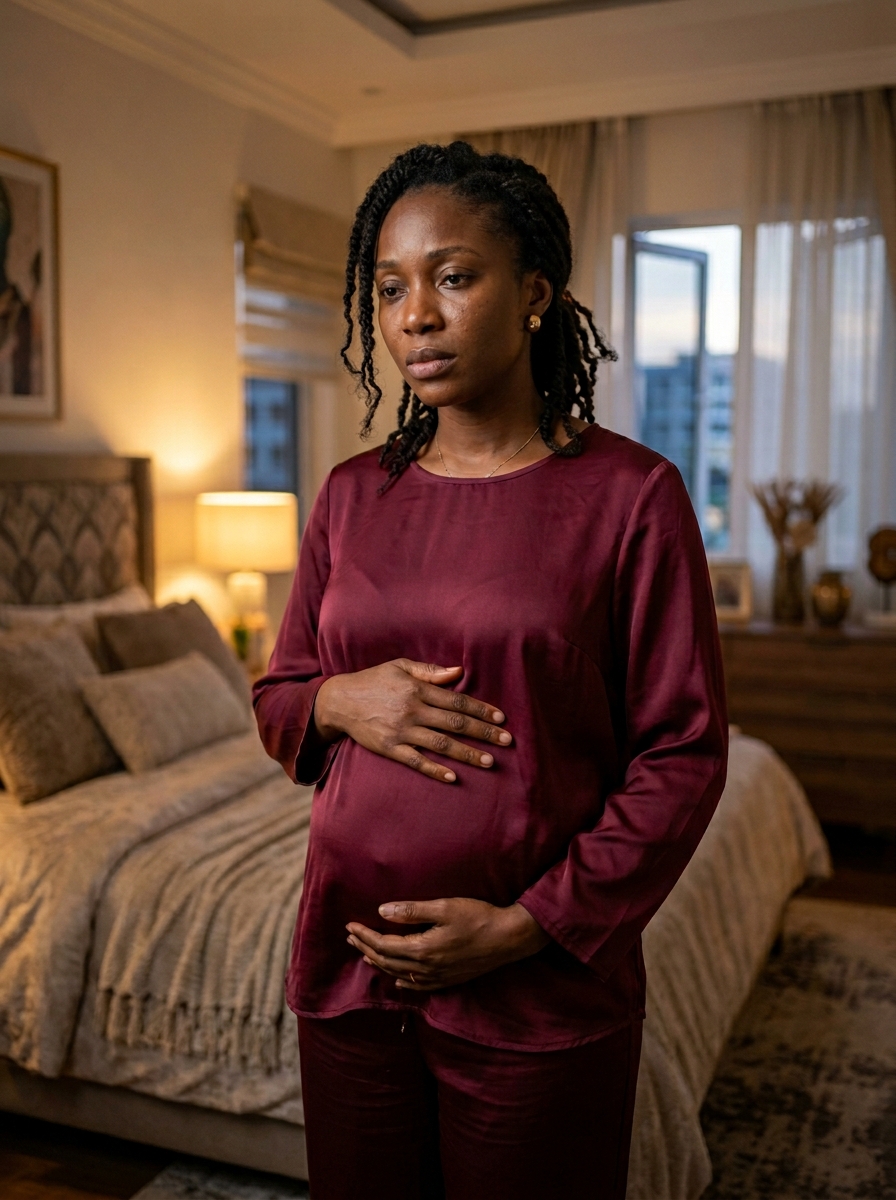
She Thought the Pain, the Bleeding, and the Bloating Were Normal.
They Were Not.
A 30-Day Natural Kitchen Protocol — Built Around Nigerian Food — That Has Quietly Helped Hundreds of Women Reduce Fibroid Pain, Control Heavy Bleeding, and Finally Take Back Their Bodies. Without Surgery.
This Is Ifeoma's Story. It Might Be Yours Too.
Ifeoma grew up knowing she was loved.
Only child of her parents. Raised well. Fed well. Educated well. She graduated top of her class, walked into a banking job before her mates even had their results, and by 24 she had done what many Nigerian women dream of — she had found a good man and walked down the aisle.
Emeka was everything. Patient, hardworking, proud of her. Their wedding photos were still on the wall when they started trying for a baby. They were in no rush. They were young. They had time.
But the pains had always been there.
Every month, three or four days before her period, something deep and heavy would settle into her lower belly. Not just cramps — something more. A pressure. Like a fist pressing from the inside. She would reach for ibuprofen and lie on her side and wait. The pain was something she had always known, something she had grown up thinking was just "how it is." Her mother had painful periods too. Her aunties had painful periods. Painful periods, she believed, were simply what it meant to be a woman.
The bleeding was the same — heavy, yes, but she chalked it up to strong blood. Her mother's words. "Our women bleed heavy. It means your womb is strong." She would go through pads faster than her friends, but she said nothing. She carried extras in her bag like it was normal. Because to her, it was.
And the bloating — she had always had a slightly rounded lower belly. She thought it was because she ate well. Because she lived well. Was it not her mother that always said a well-fed woman carries weight well?
She did not know. She did not question it.
She did not know those three things — the pain, the bleeding, the bloating — were not normal at all.
One Year Into Marriage. No Baby. Something Was Wrong.
The first year passed. Then the second began.
Her mother called every Sunday. The calls were sweet at first — then pointed. "Ifeoma, when are we expecting good news? I got pregnant with you the very month after our wedding. What is happening?"
Emeka said nothing. He was patient. But she could see the question forming behind his eyes every time her period arrived. He would become quieter. More careful with his words. She knew that quietness. It was not peace. It was worry wearing a gentle mask.
At work, it was worse. Her colleagues were announcing pregnancies, sharing scan photos on the office WhatsApp group, planning baby showers. Someone pulled her aside one afternoon and whispered: "Ife, are you sure you are not glowing? Your belly is looking like something…"
She laughed. Said she was just bloated.
She walked to the bathroom and cried for fifteen minutes. Because the question landed exactly where all her fear already lived.
She was not pregnant. She did not know why. She was afraid to find out.
Two years of this:
🔴 Pain so bad she called in sick to work at least two days every cycle. She stopped explaining. "Stomach issue" was easier than the truth.
🔴 Bleeding so heavy she bought pads in bulk and still ran out. She ruined work clothes twice. She started wearing dark colours exclusively. She knew which office chairs were "safe."
🔴 A belly that would not go down — even when she had barely eaten. Colleagues kept watching. She wore loose blouses. She stopped letting Emeka see her undress.
🔴 A husband growing quieter every month. A mother-in-law calling more often. A womb that kept refusing to cooperate.
One Thursday morning, after her third time ruining a pad in two hours, she booked a gynaecologist appointment.
The Doctor's Office. The Worst News. The Impossible Quote.
The scan room smelled like antiseptic and cold air.
The technician kept her face still and professional. She pressed the probe into Ifeoma's abdomen. Pressed again. Made a small note on her form. Did not say anything.
The gynaecologist saw her twenty minutes later. He had a calm voice. The kind of calm that comes from delivering bad news so often it becomes routine. He showed her the report. He said the word.
Fibroids.
Multiple fibroids. The largest one was sitting against her uterine wall. He explained how they caused the heavy bleeding. How they caused the pain. How they explained the persistent bloating that made her colleagues think she was three months gone. He explained all of it clearly, in the same voice he might use to read a weather report.
Then he said the part that changed everything.
"Ifeoma, with fibroids of this size and position, surgery is your best option. We would need to do a myomectomy. That is the removal of the fibroids — and in your case, to be thorough, we may need to discuss whether the uterus itself needs to come out. You should know that fibroids of this type can complicate conception significantly."
The room shrank. She heard: your uterus. May need to come out. The children she had already named quietly in her head. The years she had prayed. The Sunday mornings she had spent on her knees asking for what her body was apparently now going to be surgically prevented from giving.
He handed her ibuprofen and a referral letter. He showed her to the door.
She sat in her car for forty minutes. Did not drive. Just sat. The referral letter on the passenger seat. The surgery quote at the bottom: N580,000.
She did not have N580,000.
"The surgery quote sat on her kitchen counter for three weeks. She could not throw it away. She could not act on it. She just looked at it every morning when she made tea and wondered how she was supposed to keep going."
She Tried Everything. Nothing Worked.
What followed was two more years of trying.
The Instagram herbal vendor. N18,000. Bitter liquid in a small bottle. She drank it faithfully for six weeks. She had cramps for the first two weeks that bent her double. Her fibroid symptoms did not change by a single degree. She reported the account and cried about the N18,000 she did not have to waste.
The hormonal medication her second doctor prescribed. It reduced the bleeding a little. But she gained weight she had not asked for. She became tearful without reason. She stopped looking in the mirror. After two months, she stopped the medication. She did not recognise herself on it.
The 21-day dry fast from her church. She completed it. Genuine faith. Genuine sacrifice. At the end of 21 days, her fibroid was still exactly where the scan had placed it.
The steam therapy from the health market. Three months of consistency. Exactly the same pain. Exactly the same bleeding. Not one meaningful change.
The foreign wellness blog. Eliminate red meat, eliminate dairy, eat clean. She tried it for eight weeks. The advice was built for a woman shopping in a Western supermarket eating Western food. It did not account for jollof rice or egusi soup or the particular stress of a Nigerian woman carrying fertility anxiety on top of a demanding banking job on top of marriage pressure on top of a body that would not cooperate.
By year three, this was Ifeoma's reality every single month:
📍 Two days flat in bed when her period arrived. Hot water bottle. Curtains drawn. Paracetamol and ibuprofen together, and still not enough.
📍 Bleeding through a pad in under two hours at peak flow. Afraid to stand up too fast. Afraid to sit on light-coloured furniture.
📍 A belly that looked — to her colleagues, to her mother-in-law, to strangers on the bus — like she was somewhere between four and five months pregnant. She was not pregnant. She had not been pregnant. That fact was its own private grief.
📍 A marriage strained by silence. A husband who loved her and did not know how to say so through his growing worry. A mother-in-law whose calls had shifted from warm to pointed: "Emeka needs children, Ifeoma. He is patient, but a man's patience is not without limit."
Three years of pain. Three years of bleeding through her clothes. Three years of laughing off questions about pregnancies that were not coming. Three years of watching that surgery quote collect dust while her savings crept, too slowly, toward the number at the bottom of the page.
She was one bad month away from calling the surgeon back and agreeing to whatever he said.
And then, on a Sunday evening in January, exhausted and bleeding and in more pain than usual, she opened her phone. She was looking for something — anything — that she had not tried. She came across a title that stopped her scrolling completely.
She read the title twice. Then a third time.
"Fibroid No Go Kill You."
Something about those five words felt different from everything else she had clicked on in three years. Not a cure. Not a miracle. Not a promise of dissolving anything overnight. Just a title that sounded like someone understood — like someone had sat exactly where she was sitting.
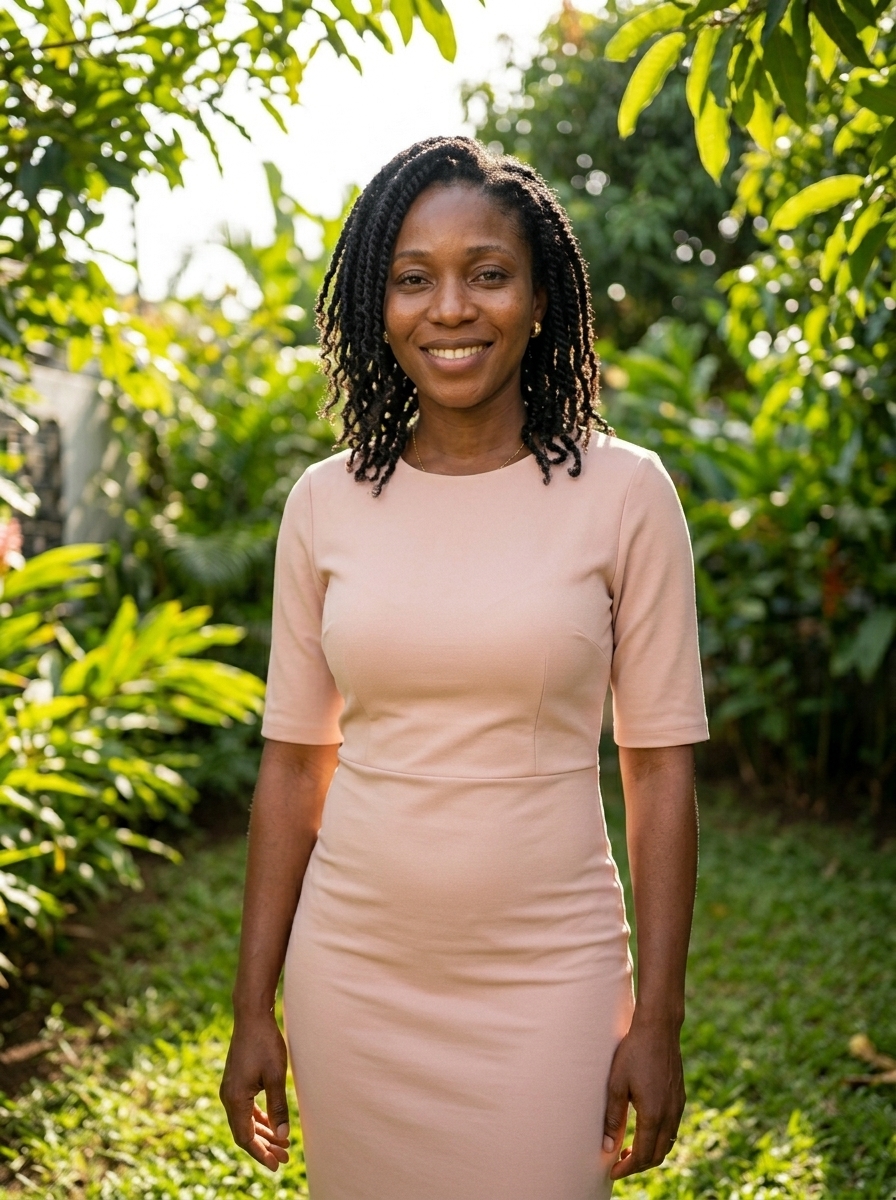
What She Found. And What Changed.
She bought it that same night. It was ₦4,999 — the price of two rounds of the herbal capsules that had done nothing. She downloaded it immediately and started reading from the beginning, not from the middle the way she had read every other health guide she had ever bought.
For the first time in three years, someone explained to her — clearly, in plain language — why she had fibroids. Not just that she had them. Not just that surgery was the answer. But why her body had grown them in the first place, what was feeding them every single month, and why everything she had tried was addressing the symptoms while the root remained untouched.
She read about oestrogen dominance. She read about the gut bacteria loop that was sending excreted oestrogen back into her bloodstream, straight back to feeding the fibroid tissue. She read about the cortisol pathway — how three years of fertility anxiety and mother-in-law pressure and financial stress were not just emotionally exhausting but were biologically, measurably worsening her hormonal imbalance. That chapter made her cry. Not from sadness — from recognition. Finally, someone had named the full picture.
She read about ugu. About unripe plantain. About why the morning fire drink with ginger, turmeric, and black pepper — ingredients that had been in her kitchen the entire time — worked on the same pathway as the ibuprofen she was taking by the packet, but without destroying her stomach lining.
She started the protocol on a Monday. She made the morning drink before breakfast. She bought unripe plantain from the market near her office. She replaced the beef in her egusi soup with mackerel. She printed the shopping list and the symptom tracker and stuck them on the inside of her kitchen cabinet.
The first week felt like nothing. She almost stopped.
On Day 9, she noticed the evening bloating was lighter. Not gone — but lighter. She stood in front of the bathroom mirror and her belly, for the first time in what felt like years, was sitting slightly flatter by 9pm than it had been at midday.
She took a photo. Just for herself.
On Day 16, her period arrived.
She was in the bathroom when she felt the first signal. She gripped the sink automatically — the way the body prepares itself for a familiar pain. She waited.
The pain came. It was real. It was there. But — manageable. A dull ache that she could breathe through. Not the cramping that doubled her over. Not the kind that cancelled two days from her calendar without asking.
She got dressed. She went to work.
She sat at her desk at 9am on day one of her period. She answered emails. She attended a meeting. She ate lunch at the cafeteria without gripping the underside of her chair.
Emeka noticed before she said a word. When she came home that evening, he looked at her face and something shifted in his. "Ife, you went to work today?" She told him yes. He held her for a long time without speaking. His silence said more than anything else could have.
By Day 30, her flow was measurably lighter. She used half the pads she had used the month before. There were no flooding incidents.
After three months of the maintenance plan, she returned for a scan.
The gynaecologist looked at the results. Looked again. Then he said, with genuine surprise in his voice: "Ifeoma, your fibroids appear stable. Nothing has grown. Your uterine environment looks healthier than your last scan. Whatever you are doing — keep doing it."
She called her mother from the car park. She could not finish a sentence. Her mother thought something was wrong. Then she understood, and they both cried — differently from how they had cried before.
One month later, she sent Chidinma a voice note at 11pm. She was almost whispering, because Emeka was asleep beside her, and she did not want to wake him. She had just taken a pregnancy test. She wanted to tell someone before the morning made it real.
She kept crying and starting and stopping and saying: "I just wanted to say thank you. I just needed to say it to someone tonight."
Chidinma has not deleted that voice note.
Introducing
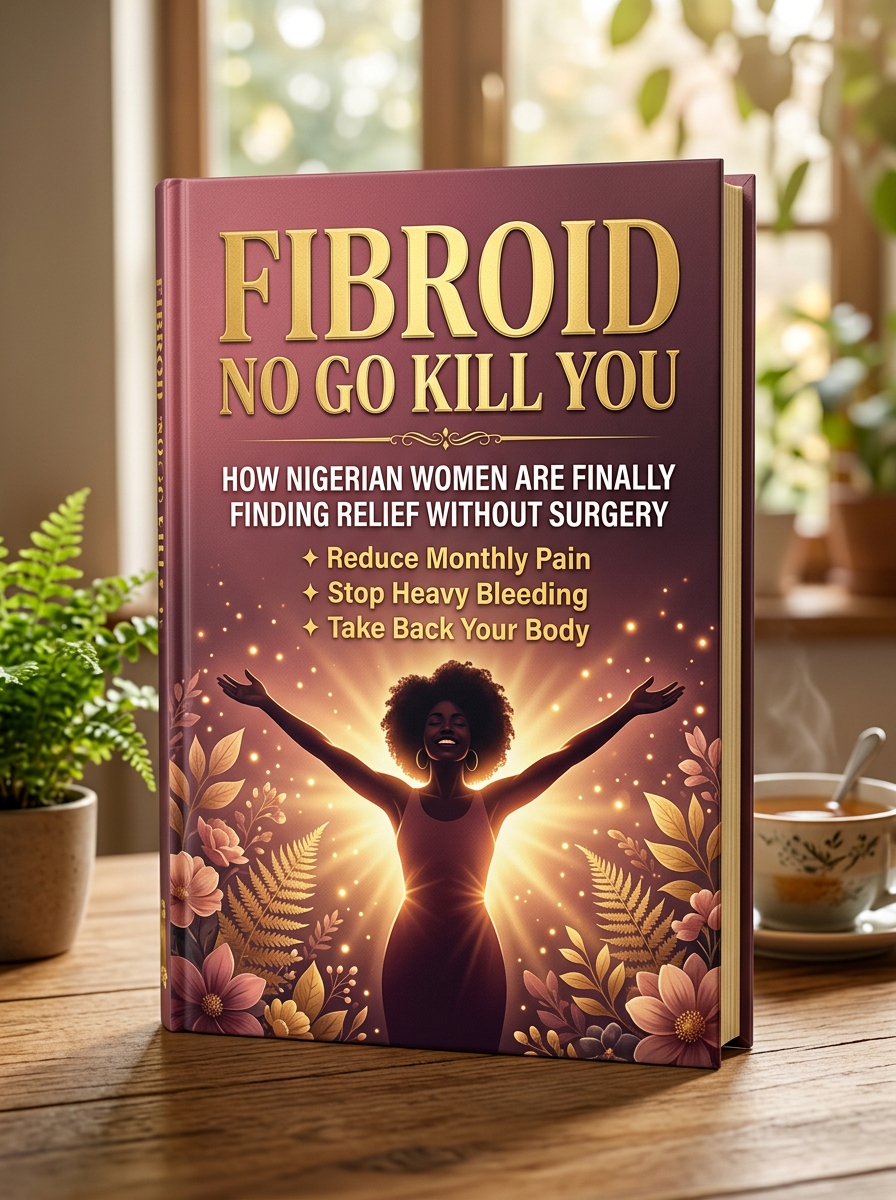
Fibroid No Go Kill You
The 30-Day Natural Kitchen Protocol for Nigerian Women
Here Is Everything Inside The Guide
- The Fibroid Truth — What Your Doctor Did Not Explain — Pg. 3Clear, plain-language explanation of why fibroids grow, what is feeding them every single month, and why every remedy you have already tried was never going to touch the root cause.
- Know Your Pattern — The Self-Assessment Checklist — Pg. 12Not all fibroids are the same. This checklist identifies your specific symptom pattern — Pain-Dominant, Bleed-Dominant, or Bloat-Dominant — so you follow a protocol built for your body, not a generic template.
- The 30-Day Anti-Inflammatory Nigerian Food Plan — Pg. 18A day-by-day eating framework built entirely around food from your nearest Nigerian market — ugu, unripe plantain, egusi, mackerel, ginger — arranged to reduce inflammation and starve fibroid growth at its source.
- The Three Daily Drinks: Your Kitchen Pharmacy — Pg. 27Three targeted drinks — the Morning Fire, the Bleeding Control Blend, and the Hormone Flush — each under ₦1,000 to make. Exact quantities. Exact preparation. Exact timing for maximum effect.
- The Hormone Reset Ritual: Seed Cycling — Pg. 34The piece most fibroid advice ignores entirely. A simple seed ritual tied to your natural cycle that rebalances the oestrogen-progesterone relationship feeding your fibroids. Four seeds. Under ₦10,000 a month.
- The Stress Connection: 10-Minute Daily Reset — Pg. 40Nobody told you stress was making your fibroids worse. This chapter explains exactly why it is — and gives you a 10-minute daily practice that interrupts the cortisol pathway biologically connecting your stress to your symptoms.
- Nigerian Market Shopping List with Naira Prices — Pg. 47A print-ready market list covering every ingredient in the protocol — with current naira price ranges, Nigerian market names, and sourcing notes for women in every part of the country.
- Monthly Symptom Progress Tracker — Pg. 54Track your pain level, pad count, bloating score, and energy week by week — so you have your own data proving what is changing, not just a feeling. Bring this to your next doctor's appointment.
- Maintenance: How to Make This Your Life — Pg. 60What to do on Day 31 and beyond — the daily habits, weekly practices, and monthly check-ins that keep your results building rather than fading. Including guidance for women planning a pregnancy.
You do not need surgery. You do not need expensive imported supplements. You do not need a hospital appointment. Every ingredient is available at your nearest local market. Every drink costs under ₦1,000 to prepare.
Yes — I Want The Guide. Get Me Fibroid No Go Kill You Now
Instant Digital Access · Pay by Card, Bank Transfer or USSD
🔒 100% Secure Checkout | Instant Access After Payment | 30-Day Money-Back Guarantee
Real Women. Real Results.
OA
Oluwafunmilayo Adeyemi
🇳🇬 Ibadan, Oyo State
4 days ago
★★★★★
I have been suffering fibroid since 2021 and every month was a nightmare. By the second week on this protocol, my pre-period swelling reduced. By the end of the 30 days, my period came and I went to work. I went to WORK! My husband said I was lying at first. I had to show him my work ID badge from that day as evidence. Adaugo, God will continue to bless you for this.
CI
Chinyere Ikenna-Obi
🇳🇬 Port Harcourt, Rivers State
1 week ago
★★★★★
I was very sceptical — I have wasted money on agbo, herbal capsules from Instagram, foreign supplements. But the food plan here is all Nigerian food. Egusi, ugu, unripe plantain — things I already know. Month one, my flow reduced. Month two, I did not even use half the pads I normally use. Mama Adaora deserves a national award.
FO
Fatimah Oduola
🇳🇬 Abuja, FCT
2 weeks ago
★★★★★
I bought this for my younger sister who has been suffering. She is 28 and was told surgery is necessary but we don't have that kind of money. She followed the 30-day plan and the results have genuinely surprised us. Her scan last month showed the main fibroid had not increased in size. She says the pain is now "manageable" — that word alone. Before this she was bedridden for two days minimum. May God reward this work.
NO
Ngozi Okonkwo-Williams
🇬🇧 London, United Kingdom
2 weeks ago
★★★★★
I am in the UK but my body responds to Nigerian food. I was spending a fortune on supplements from Holland & Barrett with minimal results. Three months in, my gynaecologist said my fibroids appear "stable." I have shared this with four women in my Nigerian women's group in London. Every single one has reported improvement. Thank you.
AA
Amaka Anozie
🇳🇬 Enugu, Enugu State
3 weeks ago
★★★★★
I have had fibroid for almost four years. Last year I was admitted to hospital twice for pain management. This year after following this guide I have not been admitted once. The days I lose to pain has gone from three days to sometimes just a few hours on day one. My doctor says my uterine environment is "more hospitable." This guide is real.
UC
Uchenna Chukwuemeka
🇳🇬 Owerri, Imo State
2 weeks ago
★★★★★
By week two, the bloating that made my coworkers think I was pregnant had visibly reduced. By the end of 30 days my period arrived and I did not miss a single day of work. For the first time in two years I did not call in sick on day one. This guide is not a miracle — it is science applied to Nigerian food. And it works.
📷 See What Is Happening Right Now…
Fibroid Guide Buyers 🎉
248 members · Active
Chidinma A.
Just paid! PAID ✓
10:02 AM
Blessing E.
Payment done. Thank God I saw this page 🙏 PAID ✓
10:04 AM
Amaka O.
Done o! Transfer sent. Can't wait to start ❤️ PAID ✓
10:07 AM
Ngozi R.
Payment completed via USSD. Buying for my sister too 💕 PAID ✓
10:09 AM
Funke S.
Done! My friend referred me. God bless her 😭 PAID ✓
10:13 AM
Hauwa M.
Card payment confirmed. Oya send it please 🙌 PAID ✓
10:18 AM
Sade F.
Mobile money sent! This is the answer I have been praying for 🙏 PAID ✓
10:22 AM
Chidinma (Admin)
Amazing response! Thank you all. Guide sent to everyone who has paid. DM me if you haven't received yours 🙏❤️
10:25 AM
Putting this guide together cost me over ₦112,000.
I am not going to charge you that.
Not ₦50,000. Not ₦25,000. Not even ₦15,000.
₦10,999
₦4,999
One-time payment · Instant digital access · No subscription
⚡ First 50 Women Only — Price Returns to ₦15,000 After That
Click Here To Get Fibroid No Go Kill You Now — ₦4,999
Instant Digital Access · Pay by Card, Bank Transfer or USSD
🔒 Secure Checkout | Instant Access | 30-Day Money-Back Guarantee
🛡️
My Bold 30-Day Risk-Free Promise — In Writing
You have spent money before on things that did not work. You are cautious. That is wisdom, not weakness.
Follow this protocol for 30 full days. If you do not notice any measurable improvement in your pain, your bloating, or your monthly flow — send me one message. I will refund every single kobo. No arguments. No long explanation. No wahala.
You carry zero risk. All the risk is on me. Because I know what this protocol does when it is followed correctly.
Yes, I Am Ready — Get Me The Guide Now 30-Day Money-Back Guarantee · Instant AccessYou Have Two Options Right Now
✅ Option 1 — Take Action Today
Get the Fibroid No Go Kill You guide. Follow the 30-day protocol built specifically for a Nigerian woman's body, Nigerian food, and the Nigerian experience of managing this condition. Reclaim your period days. Reclaim your confidence. Reclaim your body. Take the first real step toward the future you have been praying for.
❌ Option 2 — Close This Page
Go back to the hot water bottle. Keep losing two days every month. Keep going through pad after pad. Keep avoiding certain chairs, certain dresses, certain conversations. Keep watching that surgery quote sit on your counter like a bill you cannot pay. Keep waiting for something to change by itself. Maybe it will. But you have been waiting three years already.
Maybe God wanted you to see this page today. Maybe Ifeoma's story is the story He wanted you to read. Maybe the answers were in your kitchen all along.
Yes! I Want Fibroid No Go Kill You — ₦4,999 Only
Click now · Pay instantly · Download immediately · 30-day money-back guarantee
🔒 100% Secure Checkout | Instant Digital Access | 30-Day Money-Back Guarantee
This is a digital product. No physical item will be shipped. Access is granted immediately after payment.
💬 Share Your Experience
Submit Your Testimony